
project
in development
Sigil
Custom, iconic digital avatars for personal brands, teams, and studios.
Kev Vergara
Founder of Sigil
Published July 4, 2026
Where It Comes From
I've always admired what the talented designer Darius Dan built with tiny.supply, beautiful, approachable, custom avatars with a clean, distinct art style that gave people a real identity online instead of a default profile photo. It's some of the best work in the space, and Sigil wouldn't exist in its current form without that inspiration. Thank you, Dan!
The Problem With Low Barriers
I've spent years watching the digital creator space: Notion template creators, solo founders, indie app developers, web design agencies, and endless others—and noticed the same problem over and over: real businesses, run by capable people, represented online by a SpongeBob avatar, or worse, a generic AI-generated caricature that looks uncanny and unfinished.
This happens because the barrier to starting an online business is almost nonexistent. No capital, no storefront, no office. Just a computer and wifi.
That's something I genuinely love about digital business. Anyone can start.
But a low barrier means everyone starts.
And when everyone starts, standing out gets harder, and trust becomes the scarce resource. Between two strangers selling the same thing, one with a SpongeBob avatar and one with their real face, you already know which one earns the benefit of the doubt first.
The Part Nobody Says Out Loud
Here's the problem: not everyone wants to become a public persona. Not everyone wants their private life on display. Not everyone wants to run their brand through their face, and that's completely fine. You don't need to (but it certainly helps).
But if you're not going to show your face, the answer isn't a SpongeBob avatar either.
I'm a private person myself. I don't put my actual face online, not for Kev Vergara, not for Kevechino, not for anything I've built.
I wanted an identity that felt as considered and intentional as the work behind it, without needing a photo to carry it.
For people who want to build something real, but would rather be known for the work than the face behind it. For people who want to remain anonymous, maintain their privacy, or even just exude a different type of brand presence—this is where Sigil comes in.
What It Is
Sigil (noun): an inscribed or painted symbol considered to have magical power.
A Sigil is a custom-designed digital avatar that represents you across online platforms. Designed to help you express your identity, build recognition, and establish a strong brand presence wherever you operate online.
The Art Style
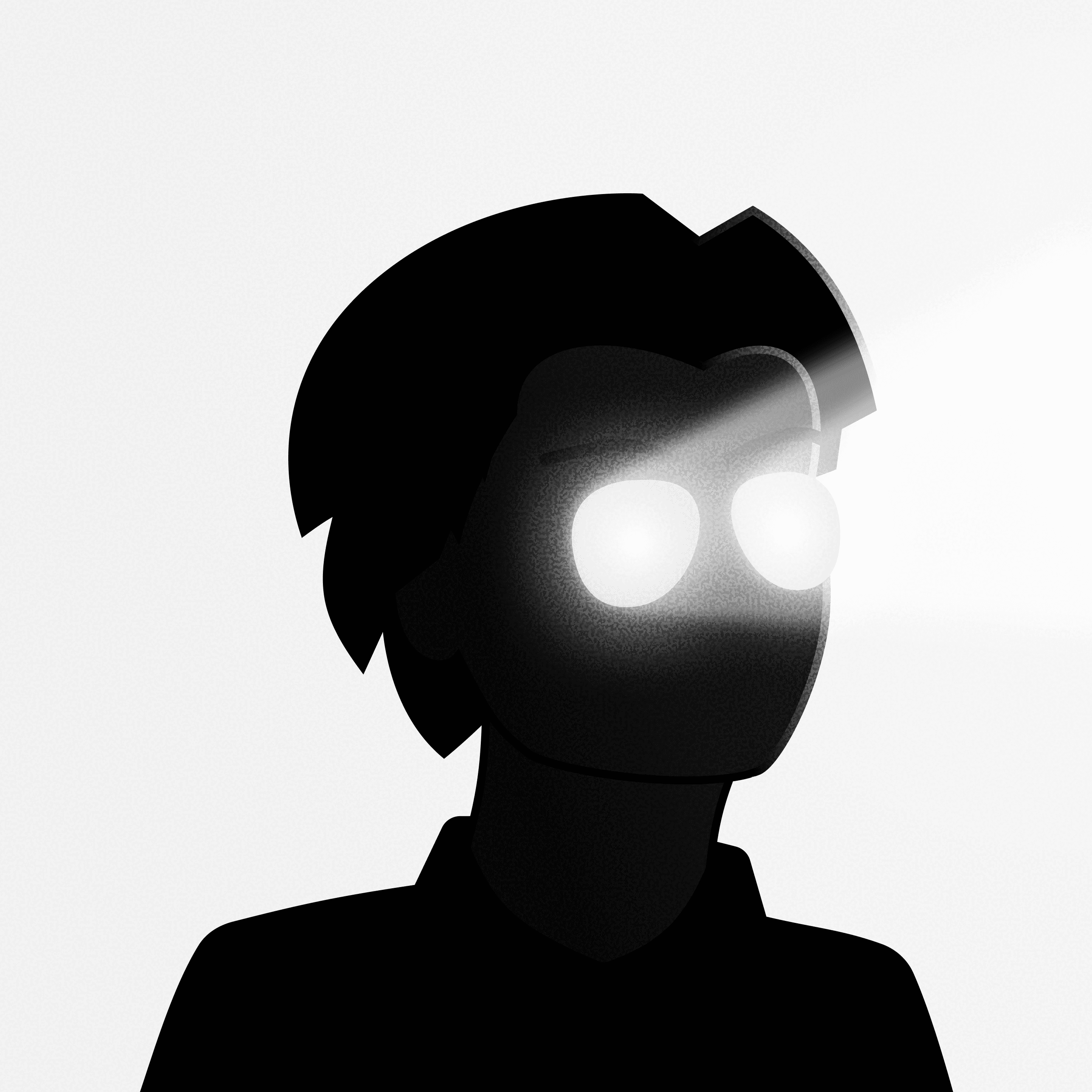
The Sigil art style is a fully blacked out, stylized silhouette with only the eyes left glowing.
That restraint is the whole point. Strip away every surface detail and the eyes become the entire focus, the one place where personality gets to exist.
It's a small design space, which is exactly why it works: on a crowded feed of photos and cartoon avatars, a near-black silhouette with glowing eyes stands out. Also, it looks badass (real reason).
But restrained doesn't mean generic. Every distinguishing detail still makes it through the silhouette: glasses, a hat, a scar, a nasal cannula, a Rubik's cube in someone's hand, even a pet cradled in their arms. If it's part of who you are, it's part of your Sigil. The blacked out art style isn't meant to limit expression, but rather enhance the depth of it.
My own Sigil emits light through the glasses instead of the eyes directly: a small detail, but an intentional one. It's meant to suggest quiet gravitas: someone with profound wisdom. While I'm no Dumbledore, that's the feeling I was going for.
Color carries the rest of the personality. Black and white are the defaults, but Sigils can be forged in red, blue, green, yellow, pride colors, or custom gradients — whatever presence someone wants to put forward.
Static Sigils work everywhere. But there's also a motion version: hover over it, and the background shifts from white to the Sigil's chosen color while the eyes flare brighter or the light rays extend outward. Most platforms don't support animated profile photos yet, but the option exists for anywhere that does.
I tested the style on Darth Vader as a proof of concept, and it held up perfectly.
The Sigil art style also works especially well on characters like Batman, Darth Vader, Spider-Man, and so on, because their unique identifiers (apart from the eyes) stand out.
Where It's Going
Right now, Sigil is in its early development phase. I'm crafting Sigils for friends, of famous characters, and a range of use cases, testing the art style against different faces, features, and personalities before opening it up publicly.
One piece of that future I'm especially excited about: the Hall of Sigils. A dedicated page on the site for everyone who owns one: verified, complete with a Seal of Authenticity, a bio, and links to their social profiles and projects. Not just a gallery of avatars, but a public record of who's building what. A place where a Sigil becomes more than a profile picture, it becomes a small, standing piece of credibility.
Sigil becomes the answer to a question more builders will start asking: how do I look this serious without showing my face?
Long-term, I want Sigil to be the default answer to that question — for solo founders, indie creators, and anonymous builders who take their work seriously enough to want an identity that matches it.